Mission-Critical Services (MCX)
MCX is the 3GPP standard for delivering mission-critical voice, video, and data communications over broadband mobile networks. These services are designed to ensure prioritised, reliable, and secure communication over 4G LTE, 5G, and future network technologies.
"*" indicates required fields
MCX Overview
RideOnTrack’s MCX ecosystem is built on three layers: the solutions layer that provides everything needed to deploy and operate MCX, including our SDK, MCX Server, SIP Core, and Interworking Functions (IWFs), with fully featured MCPTT, MCData, and MCVideo services running on top. All components are fully compliant with 3GPP Release 18 and onwards. These services are delivered over the network layer that supports 4G and 5G, including FRMCS-networks. Legacy networks are also connected via IWFs throughout migration.
The transition to mission-critical broadband
Mission-critical communications are undergoing a fundamental shift from dedicated narrowband systems to broadband, standards-based MCX architectures over 4G and 5G networks.
Legacy systems are voice-dominant, optimised for half-duplex push-to-talk with only limited data capabilities.
Voice, data, and video delivered over a single broadband bearer. One standards-compliant platform for all three mission-critical services.
Each vendor implements its own protocols and interfaces, creating closed ecosystems with limited interoperability between suppliers.
Built entirely on open 3GPP MCX specifications. This ensures multi-vendor interoperability, a clear and public evolution path, as well as well-defined security, authentication, and encryption requirements.
Requires purpose-built radio infrastructure operated exclusively for mission-critical users, with high capital and maintenance costs.
Runs over commercial 4G/LTE, 5G mobile networks, and future next-generation mission-critical networks, leveraging existing coverage and shared infrastructure to reduce cost and accelerate deployment.
Narrowband bearers limit throughput to low-bitrate voice and basic short messaging, leaving no room for data-heavy applications, such as real-time data exchange, file transfer and video.
Broadband bearers enable multi-megabit real-time data exchange, file transfer, and live multi-stream video for situational awareness.
Features
Mission-Critical Services
Communication & Call Handling
Priority & Emergency Management
Dual-Layer Redundancy
Location Services

MCPTT, MCData, MCVideo
MCX covers all three 3GPP mission-critical services in a single, standards-compliant platform. MCPTT handles push-to-talk voice, MCData covers messaging and file transfer, and MCVideo adds one-to-one and group video.

Communication & Call Handling
From pre-arranged group calls to ad-hoc sessions, first-to-answer, and ambient listening, MCX supports the full range of call types your operations require. Groups can be changed during an active call, so communications adapt as situations develop rather than being locked into a fixed structure.

Priority & Emergency Management
MCX provides built‑in support for emergency and imminent‑peril situations, enabling priority upgrades and downgrades of ongoing calls, and emergency alerts. All behaviour is governed by user profiles and policies so only authorised users can invoke critical functions, fully in line with MCX specifications.
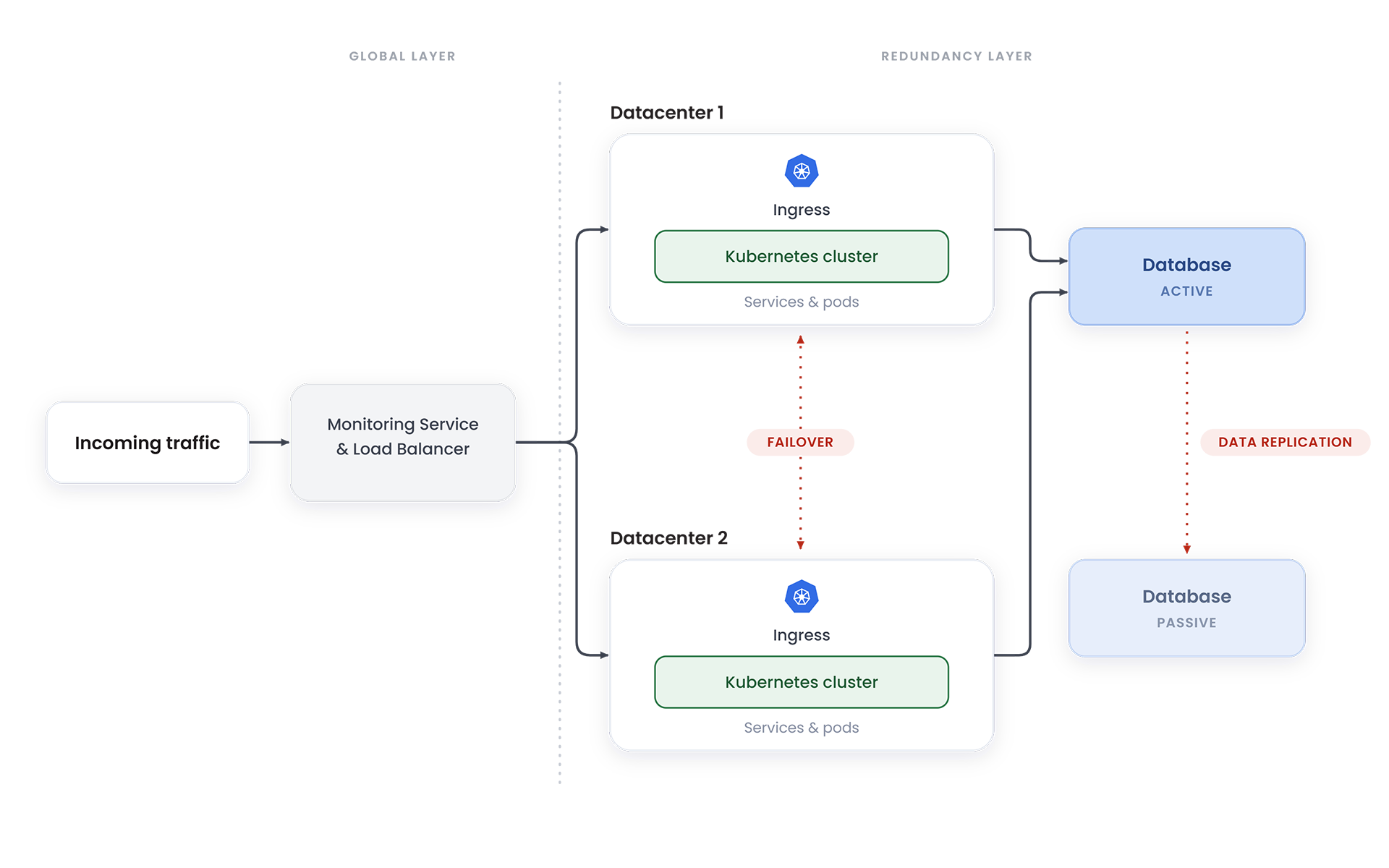
Dual-Layer Redundancy
The MCX platform is built for continuous operations. A dual-layer redundancy model protects against failure at both application and infrastructure level. Applications automatically detect and recover from faults, while the architecture is deployed across multiple data centres to eliminate single points of failure, ensuring a 99.999% availability.

Location Services
Devices can report and share their position based on configurable triggers such as time, distance or functional alias activation. As the MCX Server centrally updates reporting behaviour, operators gain accurate, real‑time situational awareness without local reconfiguration.


Interworking Functions

IWF GSM-R
The GSM‑R Interworking Function is designed to support a controlled transition from existing GSM‑R networks towards FRMCS and 5G.
It bridges GSM‑R and MCX by translating signalling, call control, and supplementary services, so mission‑critical communication can continue during mixed deployments.

IWF TETRA
The TETRA Interworking Function enables service continuity between TETRA cores and MCX by translating signalling, media, and identities between both domains.
It supports core mission-critical services such as group and point‑to‑point calls, emergency behaviour, and SDS messaging, with optional codec transcoding when needed. It is designed in line with ETSI TS 123 283 and relevant 3GPP MCX specifications (Release 18 and onwards).
IWF Public Networks
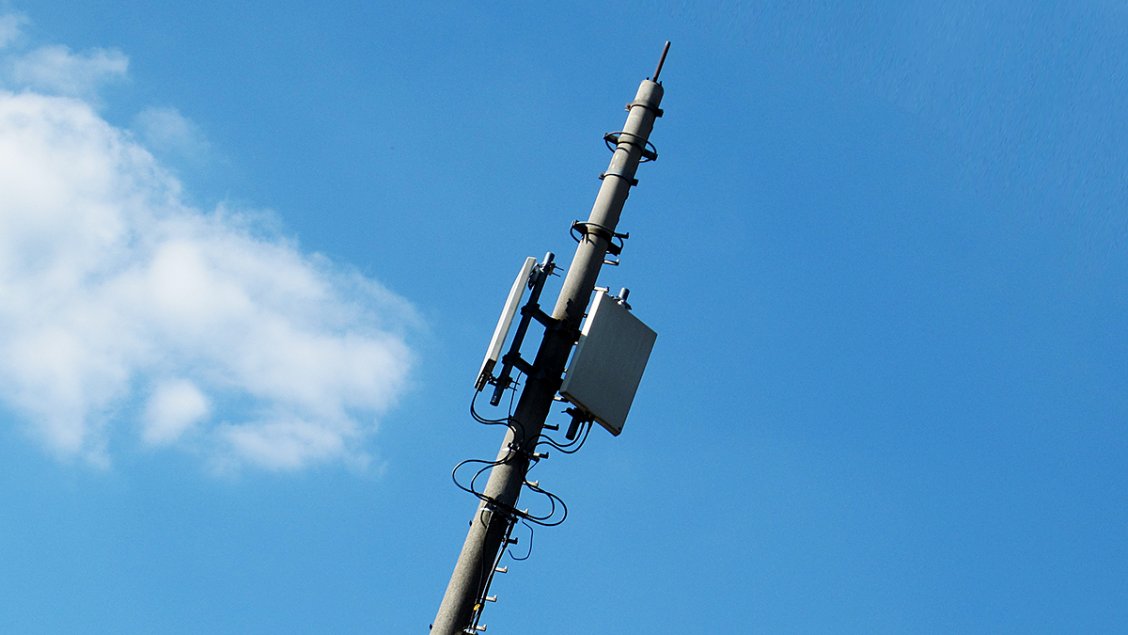
The Public Network IWF connects MCX to external telephony so MCX users can communicate with parties outside the mission‑critical domain when required.
It handles the necessary signalling, media, and identity translation between MCX and the public telephony domain, using the same containerised microservices approach as the other IWFs.
Proven Interoperability
ETSI Plugtests are neutral events where mission-critical vendors connect live systems over real interfaces to prove they work together. RideOnTrack takes part in two related series: the broader, multi-industry MCX Plugtests and the rail-specific FRMCS Plugtests, across 2024–2026.
10TH

GoalPut the full MCX Solution portfolio through complex, multi-vendor 4G/5G scenarios at ETSI’s largest MCX event yet — run with TCCA and UIC, and drawing 240 participants.
RideOnTrack’s MC‑X Dispatcher was one of the only fully functional Location Management Clients on site, tracking registered clients on a live map and launching calls directly from a location pin — one of the standout capabilities on display at ETSI’s largest MCX event to date.
4TH

GoalShow that the FRMCS/MCX dispatching solution could interoperate with independent vendors’ systems under ETSI-witnessed conditions — RideOnTrack’s first appearance at a rail-specific plugtest.
RideOnTrack completed its test cases end to end, confirming reliable dispatching communication for mission-critical rail operations across all five participating vendor systems.
5TH

GoalStress-test the dispatching solution’s robustness across a much larger multi-vendor field, adding authentication, group communication and document exchange to the scope.
RideOnTrack’s dispatching solution was confirmed interoperable with systems from nine partner vendors.
News
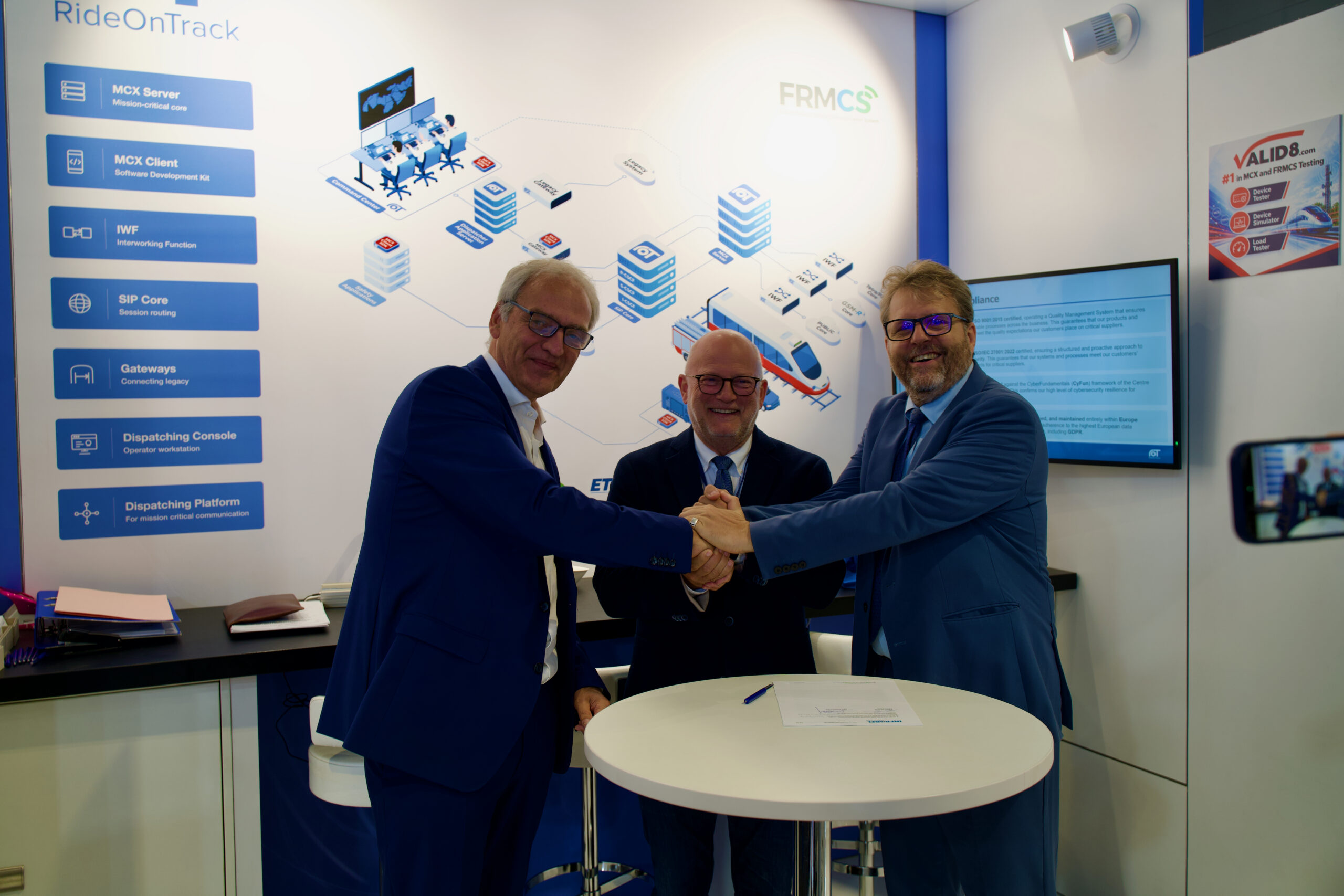
Infrabel and RideOnTrack Sign New Multi-Year Contract at InnoTrans 2026
RideOnTrack and Infrabel sign a new multi-year contract to modernize Belgium’s mission-critical rail communication, signed at InnoTrans 2026 in the presence of Infrabel CEO Benoît Gilson and Minister Jean-Luc Crucke.
Read more
RideOnTrack is ISO 9001:2015 Certified
RideOnTrack is now ISO 9001:2015 certified, recognizing the quality and resilience at the heart of our mission-critical products.
Read more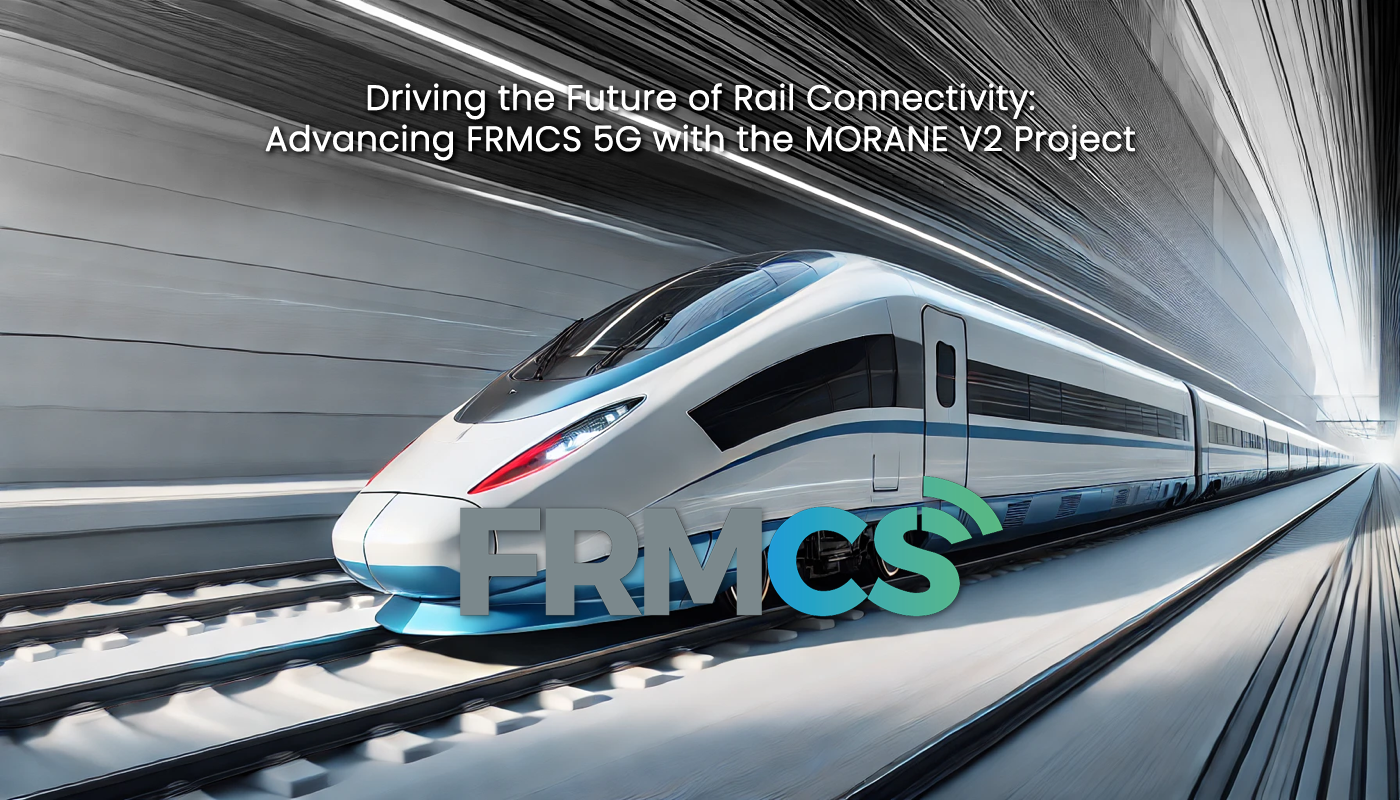
RideOnTrack Completes First FP2-MORANE-2 Test Case
A milestone for European rail: RideOnTrack is first to pass a MORANE-2 test case, proving its FRMCS dispatching solution works under real operational conditions.
Read more Infrabel and RideOnTrack Sign New Multi-Year Contract at InnoTrans 2026
RideOnTrack and Infrabel sign a new multi-year contract to modernize Belgium’s mission-critical rail communication, signed at InnoTrans 2026 in the presence of Infrabel CEO Benoît Gilson and Minister Jean-Luc Crucke.
Read more RideOnTrack is ISO 9001:2015 Certified
RideOnTrack is now ISO 9001:2015 certified, recognizing the quality and resilience at the heart of our mission-critical products.
Read more RideOnTrack Completes First FP2-MORANE-2 Test Case
A milestone for European rail: RideOnTrack is first to pass a MORANE-2 test case, proving its FRMCS dispatching solution works under real operational conditions.
Read more